
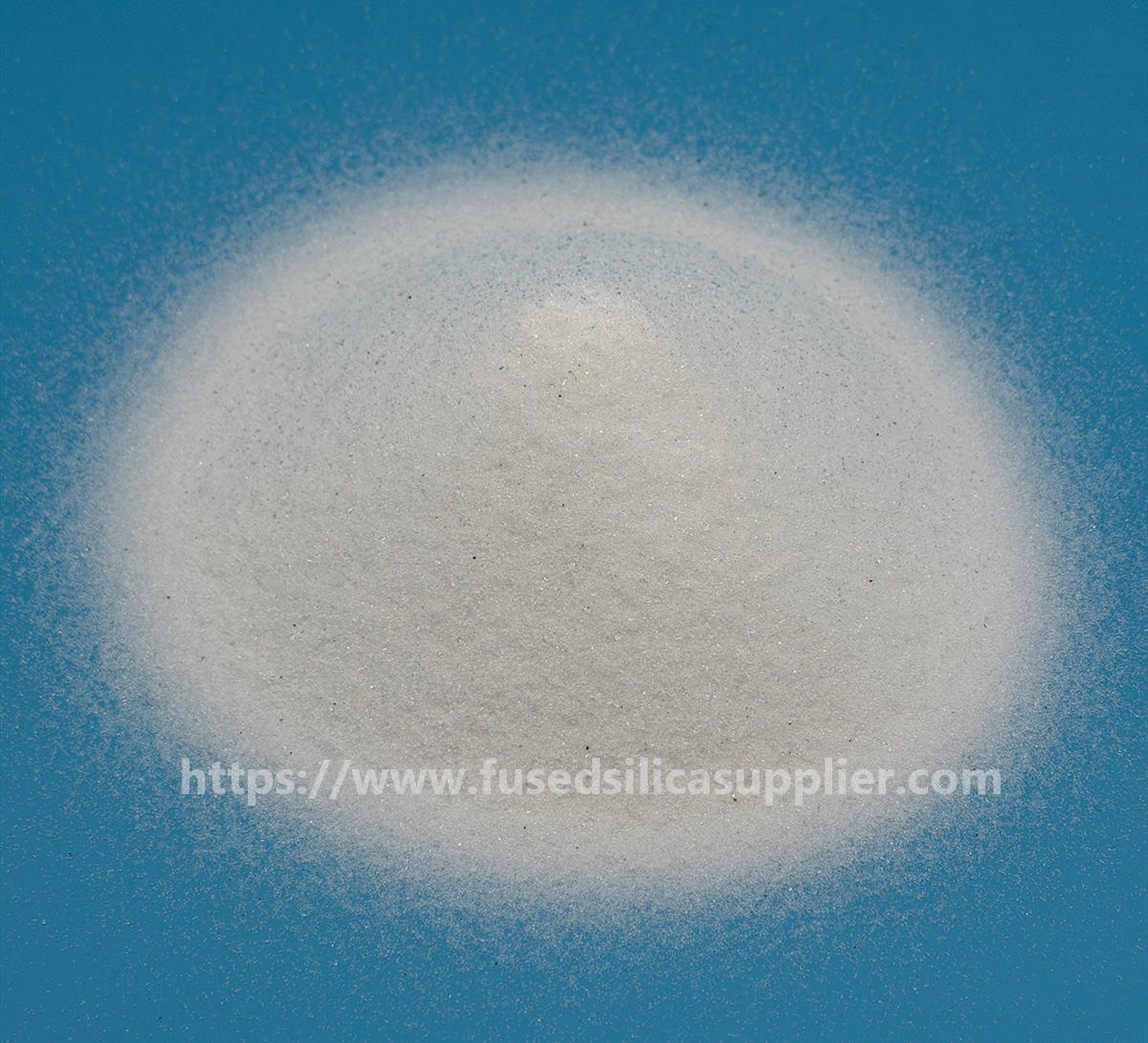
Fused Silica Applications in Investment Casting
1. Introduction
Investment casting, also known as precision casting or lost wax casting, is widely used to produce complex metal components with excellent surface finish and dimensional accuracy.
One of the key materials enabling this process is Fused Silica, which is extensively used in ceramic shell systems.
Thanks to its extremely low thermal expansion, high purity, and excellent thermal shock resistance, fused silica has become the preferred refractory material for high-quality investment casting applications.
2. Why Fused Silica Is Ideal for Investment Casting
Fused silica offers several critical advantages in ceramic shell construction:
- Ultra-low thermal expansion
- Minimizes cracking and distortion during dewaxing and metal pouring.
- Excellent thermal shock resistance
- Withstands rapid temperature changes from room temperature to molten metal.
- High chemical purity (SiO₂ ≥ 99.5%)
- Reduces reactions with molten alloys and improves casting surface quality.
- Stable performance at high temperatures
- Especially suitable for steel, alloy steel, and superalloy castings.
These properties make fused silica superior to traditional refractory materials such as zircon or alumina in many shell systems.
3. Main Applications of Fused Silica in Precision Casting
3.1 Ceramic Shell Slurry (Primary & Backup Coats)
Fused silica flour is commonly used in:
- Primary slurry (face coat)
- Backup slurry layers
Its fine particle size ensures:
- Smooth casting surface
- High dimensional accuracy
- Reduced shell cracking risk
3.2 Stucco Materials
Fused silica sand (coarse grades) is applied as stucco during shell building:
- Enhances shell strength
- Improves permeability
- Maintains shell stability during firing and pouring
3.3 High-Temperature Shell Systems
For applications involving:
- Carbon steel
- Stainless steel
- Tool steel
- Nickel-based superalloys
Fused silica-based shell systems provide:
- Low expansion mismatch
- Reduced metal penetration
- Improved casting yield
4. Typical Grades Used in Investment Casting
GradeApplicationFused Silica Flour (200–325 mesh)Slurry / face coatFused Silica Sand (30–100 mesh)Stucco layersA / B / AB GradeDifferent purity and particle distributions
Note: European foundries commonly select AB or B Grade for backup layers, while high-end precision castings prefer A Grade for face coats.
5. Industries Using Fused Silica Investment Castings
Fused silica ceramic shells are widely used in:
- Aerospace components
- Automotive precision parts
- Industrial valves and pumps
- Medical instruments
- Energy and power equipment
These industries demand tight tolerances, smooth surfaces, and high metallurgical integrity, all of which are supported by fused silica-based shell systems.

6. Conclusion
Fused silica is a core material in modern investment casting technology.
Its unmatched combination of low thermal expansion, thermal shock resistance, and chemical stability ensures reliable shell performance and superior casting quality.
For foundries seeking high yield, low defect rates, and consistent precision, fused silica remains the material of choice in ceramic shell construction.